Garbage Disposal Buying Guide: How to Choose Well
Choose a garbage disposal by matching its power and size to your food scraps, sink cabinet and electrical setup. Then compare feed type, noise features, installation needs and warranty before you buy.
On this page (8 sections)
- What should you check before choosing a garbage disposal?
- How much horsepower do you need?
- Should you choose continuous feed or batch feed?
- Will the disposal fit under your sink?
- How do you compare sound and grind features?
- Should you buy a corded or hardwired disposal?
- What else affects installation and upkeep?
- Which garbage disposal fits your kitchen?
Choose a garbage disposal by matching motor power, physical fit and installation needs to your kitchen. A 1/2 HP model can suit everyday scraps, while 3/4 HP offers more motor power for a busier routine; cabinet space, sound features and wiring can matter just as much.
Start by measuring the space under your sink and noting how the current disposal connects. Then decide what you expect to grind, how often you cook, and whether you want a corded or hardwired model.
This guide walks through the main choices and shows where four example models fit. For a focused horsepower decision, read what HP garbage disposal you need at home.
What should you check before choosing a garbage disposal?
Check your sink fit, electrical setup and typical food scraps first. Those details narrow the options before you compare motor power, sound and convenience features.
Use this checklist:
| Check | What to find out |
|---|---|
| Existing setup | Mounting style, drain connection, dishwasher connection and power connection |
| Cabinet space | Available height and width, plus room for plumbing and stored items |
| Food habits | Everyday scraps, cooking frequency and the scraps you plan to keep out |
| Controls | Whether the disposal uses a wall switch, air switch or batch-feed cover |
| Household needs | Sound sensitivity, ease of access and maintenance preferences |
| Installation | Whether the unit is a straightforward match or needs electrical or plumbing work |
A model's horsepower alone cannot tell you whether it will fit or suit your routine. Compare the full installation details and the features you will use.
How much horsepower do you need?
For routine food scraps, start by comparing 1/2 HP and 3/4 HP models. The right choice depends on how much you cook and the kinds of scraps you plan to grind.
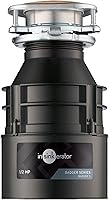
A 1/2 HP unit can be a practical starting point for everyday kitchen cleanup. The InSinkErator Badger 5 has a 1/2 HP Dura-Drive induction motor and galvanized steel grind components.
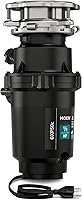
The Moen Prep Series PRO is another 1/2 HP option, with a compact design and pre-installed power cord. Moen describes its 2,600 RPM Vortex motor as designed for everyday food scraps.
A 3/4 HP model may suit a busier kitchen or someone who wants more motor power. The InSinkErator Evolution 3/4 HP adds 3-Stage MultiGrind technology and Quiet SoundSeal features; the Power Series 3/4 HP uses 2-Stage MultiGrind technology and reduced-noise features.
Horsepower is one part of the decision. Compare the difference between 1/3 HP and 1/2 HP disposals if you are weighing a smaller motor against a standard everyday option.
Should you choose continuous feed or batch feed?
Choose the feed style that matches how you prepare food and control the sink. Continuous-feed units let you add scraps while the disposal runs, while batch-feed units operate after scraps are loaded and the cover is in place.
The four example models in this guide are continuous-feed disposals. That style can be convenient when you want to clear scraps as you prep or rinse, but it relies on using the switch as intended.
Batch-feed operation can appeal if you prefer to load a set of scraps before turning the unit on. Check the specific model's operating steps and the manufacturer's safety instructions, since feed style alone does not replace careful use.
Will the disposal fit under your sink?
Measure the available cabinet space and connections before you order. A disposal must fit alongside the sink, drain plumbing, dishwasher hose and anything you store below the basin.
Measure the current unit's height and width, then compare those figures with the replacement's dimensions. Leave room to reach the reset button, mounting parts and plumbing connections.
The listed dimensions for the examples vary. The Badger 5 is 6.31 x 6.31 x 11.5 in, the Evolution is 8.25 x 8.25 x 12.25 in, the Moen is 6.34 x 6.34 x 14.76 in, and the Power Series is 8.25 x 8.25 x 12 in.
Those numbers do not account for your pipes or cabinet layout. Measure the usable opening and consider whether the disposal's shape will block storage or make future service difficult.
If you are replacing an existing unit, compare its mounting assembly and drain connection with the new disposal's instructions. Our guide on how to replace a garbage disposal under your sink explains the main replacement steps.
How do you compare sound and grind features?
Compare named sound and grind features when noise or clog prevention matters to you. A quieter design may help in an open kitchen, while added grind stages can be a reason to compare models if you cook often.
The Evolution 3/4 HP has Quiet SoundSeal and 3-Stage MultiGrind technology. The Power Series 3/4 HP has reduced-noise features and 2-Stage MultiGrind technology.
These feature names describe the makers' designs, not a guarantee of a particular sound level in your home. Cabinet construction, installation and what is being ground can affect the experience.
The Badger 5 and Moen Prep Series PRO focus on everyday food scraps and compact or space-saving designs. If quiet operation is a priority, compare more options in our best quiet garbage disposals guide.
Should you buy a corded or hardwired disposal?
Match the power connection to your existing outlet or wiring and the model's installation instructions. A disposal with a cord may simplify a compatible replacement, while a hardwired model may suit an existing hardwired connection.
The Badger 5 and Moen Prep Series PRO examples include a power cord. The Evolution and Power Series examples include an EZ Connect Hardwire Adapter, and their EZ Connect power cords are sold separately.
Do not assume a cord or adapter means the unit will match your current setup. Check the installation manual and confirm the electrical connection before purchase.
Read our corded vs non-corded garbage disposal comparison for a closer look at the two connection styles. For circuit questions, see whether a garbage disposal needs its own circuit.
What else affects installation and upkeep?
Check the mounting hardware, dishwasher inlet and warranty before choosing. These details can affect the time, parts and help you need for a replacement.
The Badger 5 includes a power cord and installation hardware. The Evolution and Power Series include an EZ Connect Hardwire Adapter and a removable dishwasher inlet plug; both list the power cord as sold separately.
The Moen Prep Series PRO includes a pre-installed power cord and is described as a simple swap for most existing disposals, including non-Moen brands. Its fit still depends on your existing assembly and connections.
Warranty coverage differs among these examples. The Badger 5 includes a 3-year in-home service warranty.
Moen offers a 5-year limited warranty with in-home service, and the Power Series includes a 6-year limited service warranty. The Evolution's warranty description does not specify a term here, so check its current warranty terms before buying.
Keep the manufacturer's instructions for use and maintenance. Avoid putting unapproved scraps into the disposal, and use the maker's instructions if it jams, leaks or stops working.
Which garbage disposal fits your kitchen?
Choose the model that fits your cabinet and power connection, then match its motor and features to your routine. For everyday scraps and a corded replacement, compare the Badger 5 and Moen; for a 3/4 HP option, compare the Evolution and Power Series.
- Choose the Badger 5 if you want a 1/2 HP model with a factory-installed cord and compact dimensions.
- Choose the Moen Prep Series PRO if a compact 1/2 HP unit with a pre-installed cord suits your existing assembly.
- Choose the Evolution 3/4 HP if its 3-stage grind and Quiet SoundSeal features match your priorities.
- Choose the Power Series 3/4 HP if you want 2-stage grinding, reduced-noise features and its stated warranty.
Before you decide, verify measurements, mounting compatibility and electrical requirements. If you are still deciding whether a disposal makes sense for your household, read is a garbage disposal worth it for your kitchen.
Frequently asked questions
What horsepower garbage disposal should I buy?
Choose horsepower based on how often you cook and what scraps you expect to grind. A 1/2 HP unit can suit everyday food scraps, while 3/4 HP gives you more motor power for a busier kitchen.
Check your sink space, electrical setup and manufacturer guidance before choosing.
Is a 3/4 HP garbage disposal better than a 1/2 HP model?
A 3/4 HP disposal has a higher horsepower rating, but it may not be the right choice for every kitchen. Compare the foods you handle, cabinet clearance, sound features and installation needs.
A well-matched 1/2 HP model may suit routine scraps without adding capacity you do not need.
Should I choose a continuous-feed or batch-feed disposal?
A continuous-feed disposal runs while its switch is on, letting you add scraps as it operates. A batch-feed model runs after you load and cover the chamber.
Choose based on how you cook and the control style you prefer, then check the unit's installation requirements.
Do garbage disposals fit every sink?
No. Sink openings, mounting hardware, drain connections and under-sink clearance can affect fit.
Measure the current unit and cabinet, check the new model's dimensions and mounting details, and confirm the drain and dishwasher connections before buying.
Does a garbage disposal need a dedicated circuit?
Electrical requirements depend on the disposal, the existing circuit and local rules. Check the installation manual and have a qualified electrician assess the wiring if you are unsure.
Our guide to whether a garbage disposal needs its own circuit covers the questions to check.