How to Choose a Garbage Disposal Size
To choose a garbage disposal size, match horsepower to what you actually grind: 1/3 HP for light everyday scraps in a one or two person kitchen, 3/4 HP for steady cooking and tougher peels, and 1 HP for heavy batches and hard scraps. Then confirm the unit's height and width fit under your sink.
On this page (9 sections)
- What horsepower tier fits your kitchen?
- How do you size a disposal for a household of one or two?
- When is 3/4 HP the right garbage disposal size?
- When should you move up to 1 HP?
- How do feed type and motor design affect the size you need?
- What under-sink dimensions do you need to check?
- Does the mounting system affect the size you choose?
- How much does the size you pick cost to run and maintain?
- What size garbage disposal should you actually buy?
To choose a garbage disposal size, start with horsepower matched to what you actually grind, not the size of your kitchen. A 1/3 HP unit covers light everyday scraps, 3/4 HP handles steady cooking and tougher peels, and 1 HP suits heavy batches and hard scraps.
Then check the unit's height, width and drain outlet against your under-sink space.
Plenty of buyers get this backwards. They pick a model on horsepower alone and find it crowds the cabinet or leaves no room for the dishwasher hose.
Sizing a garbage disposal is two decisions: the power tier first, the physical fit second.
This guide works through both, plus the details that catch people after the box is open. For the wider picture of features and brands, our garbage disposal buying guide covers the rest.
What horsepower tier fits your kitchen?
Horsepower is the best single guide to how much grinding work a disposal can take. Match the tier to your scraps, not your square footage.
A small kitchen that cooks every night can need more power than a large one that mostly reheats.
The three models we use as examples show how the tiers differ in practice. Each one is a continuous feed InSinkErator unit, so the comparison is about power and build, not feed style.
| Model | Horsepower | Grind stages | Grind components | Warranty | Height |
|---|---|---|---|---|---|
| Badger 1 with Power Cord | 1/3 HP | Single stage | Galvanized steel | 1 year | 11.5 in |
| Badger 5XP with Power Cord | 3/4 HP | Single stage | Stainless steel | 4 years | 12.63 in |
| Power Series 1 HP | 1 HP | Two stage (MultiGrind) | Stainless steel | 12 in |
Which tier to pick
- 1/3 HP suits one or two people who scrape plates and grind soft scraps. It handles everyday food waste but has the least headroom for tough peels or a full sink of prep scraps.
- 3/4 HP is the middle and the safest default for a busy household. It brings more torque to tougher scraps and, in the Badger 5XP, stainless steel grind components and a longer warranty.
- 1 HP fits heavy batches, hard scraps and buyers who want the finest grind. The Power Series adds two-stage grinding that InSinkErator says is designed to prevent clogs.
The build materials matter as much as the number on the box. The Badger 1 uses galvanized steel grind components, while the Badger 5XP and the Power Series 1 HP use stainless steel that resists rust.
That difference matters over years of scraping plates and grinding peels. Warranty length tracks the same pattern: the Badger 1 carries 1 year and the Badger 5XP carries 4 years.
Both Badger units carry InSinkErator's in-home service warranty, so a covered repair comes to you rather than the unit going to a shop.
Pick 3/4 HP as your default unless you know your kitchen is light or heavy. It is the tier most households land on, and the Badger 5XP shows why.
If you are weighing just the bottom two tiers, our garbage disposal 1/3 vs 1/2 hp comparison spells out the difference and why 1/2 HP rarely earns its place.
How do you size a disposal for a household of one or two?
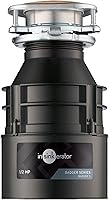
A 1/3 HP disposal is enough for one or two people who cook simply. The Badger 1 is built around that job: a 1/3 HP Dura-Drive induction motor, a single stage of grind and galvanized steel components for everyday food scraps.
It arrives with the flanges, gaskets and bolts for installation, plus a jam-buster wrenchette and a drain stopper. InSinkErator fits the power cord at the factory, so there is no separate wiring step.
Its Quick Lock mount twists on and off for a faster replacement of an existing InSinkErator unit.
The compact body is part of the appeal for a small kitchen. At 11.5 in tall and 6.31 in wide, it saves under-sink space and leaves room for other small appliances, like an instant hot water dispenser.
In a tight cabinet where a taller unit would press against the P-trap or the dishwasher hose, that saved inch matters more than extra horsepower you would never use.
The trade-off is headroom. A single grind stage and 1/3 HP of torque are not built for a pile of potato peels or a batch of fibrous scraps.
If your cooking needs grow, the unit will show it in jams and slow draining. The 1-year warranty also sets a shorter horizon than the Badger 5XP's 4 years, which is worth weighing if you plan to stay in the home.
Choose 1/3 HP for a small household with simple meals, or for a secondary sink that sees light use. Skip it if you regularly prep large meals or grind tough scraps.
Our guide to whether a garbage disposal is worth it helps if you are still deciding whether to buy one at all.
When is 3/4 HP the right garbage disposal size?
3/4 HP is the right size for most busy households. It covers regular cooking scraps and tougher peels without the jump in height and weight that comes with a 1 HP unit.
The Badger 5XP is the example we would pick from this group.
The Badger 5XP pairs a 3/4 HP Dura-Drive induction motor with stainless steel grind components that resist rust. Like the Badger 1, it uses a single grind stage and the Quick Lock mount with Lift and Latch technology for the sink connection.
The step up from the Badger 1 shows in the warranty: 4 years versus 1 year.
Its 12.63 in height is about an inch taller than the Badger 1. That matters in a shallow cabinet or where the drain outlet sits close to the floor of the unit.
Measure before you assume the extra power comes free. The width is the same 6.31 in as the Badger 1, so a cabinet that already holds the smaller unit will usually accept this one if the height clears.
Both Badger models weigh about 5 lb, which keeps them easy to lift and hold during a replacement. The Badger 5XP ships with the same install kit, including flanges, gaskets, bolts, a jam-buster wrenchette and a drain stopper.
If you are swapping out an older InSinkErator unit, the Quick Lock mount lets you reuse the existing sink flange and skip a plumbing step.
Pick 3/4 HP when your kitchen cooks most days and you want a disposal that keeps up without the cost or bulk of a top-tier model. Drop to 1/3 HP for light use, or move up to 1 HP for heavy batches.
Our garbage disposal buying guide covers the feature differences in more depth.
When should you move up to 1 HP?
Choose 1 HP when you process large batches or hard scraps regularly. The Power Series 1 HP brings a 1 HP Dura-Drive induction motor and two-stage MultiGrind technology that InSinkErator says grinds food scraps finer to help prevent clogs.
The second grind stage is the real difference. A single-stage unit breaks scraps down in one pass; the Power Series takes them through two, aiming for finer particles.
That suits households that feed the disposal a lot at once or grind tough items like peach pits. InSinkErator describes the design as built to prevent clogs, which is the reason to pay for the extra stage rather than the horsepower alone.
What the 1 HP tier adds beyond power
Three features separate this unit from the Badger models. It runs with reduced noise levels compared with standard disposals, according to InSinkErator.
It has a removable baffle for easier cleaning. And it uses the EZ Connect system: an EZ Connect Hardwire Adapter and an EZ Removable Dishwasher Inlet Plug, both of which simplify the install.
The removable dishwasher inlet plug means you can connect a dishwasher without cutting or capping anything extra.
The 12 in height is actually shorter than the Badger 5XP, though the unit weighs more, at 18.16 lb versus about 5 lb for the Badger models. That weight matters on replacement day, when you are holding the unit under the sink while lining up the mount.
The width also grows to 8.25 in, so a narrow cabinet that fits a Badger may not fit this one.
One detail to plan for: the Power Series ships with an EZ Connect Hardwire Adapter rather than a factory-installed cord. The EZ Connect Power Cord is sold separately.
That changes the install, so decide whether you are hardwiring or adding a cord before you buy. Our garbage disposal corded vs non corded comparison explains the difference.
Pick 1 HP for heavy grinding and the finest grind, and accept the higher weight and the separate cord. Stay at 3/4 HP if your scraps are ordinary and you would rather not wire a unit in.
How do feed type and motor design affect the size you need?
Feed type and motor design change how a disposal works, not how much horsepower you need. They still affect which model fits your habits, so size the horsepower first and the feed style second.
Continuous feed versus batch feed
Continuous feed units let you add scraps while the motor runs. Every model here is continuous feed, which is the common choice for most kitchens.
Batch feed models grind only a set load per cycle and suit households that want a safety interlock. Feed type does not change the horsepower tier you need.
Induction motor versus other motor types
All three models here use an InSinkErator Dura-Drive induction motor. Induction motors are built for grinding power and durability, and InSinkErator describes them as having more jam-busting torque.
A stronger motor design at a given horsepower does more of the work on tough scraps. This is why the horsepower number alone does not tell the whole story: a well-built motor at 3/4 HP can outperform a weaker motor at a higher rating.
Single stage versus two stage
A single grind stage handles everyday food scraps; two stages grind finer. The Power Series 1 HP is the only two-stage model here.
If clog prevention is your main concern and your drains are slow, the second stage is the feature to pay for. For ordinary scraps in a healthy drain, a single stage keeps the unit simpler and lighter.
What under-sink dimensions do you need to check?
Measure height, width and the drain outlet before you buy. A disposal that does not fit under the sink is the wrong size no matter what its horsepower.
These three units show the range you are working within.
| Model | Height | Width | Weight | Power source |
|---|---|---|---|---|
| Badger 1 with Power Cord | 11.5 in | 6.31 in | 5 lb | Corded electric |
| Badger 5XP with Power Cord | 12.63 in | 6.31 in | 5 lb | Corded electric |
| Power Series 1 HP | 12 in | 8.25 in | 18.16 lb | Hardwire adapter; cord sold separately |
The three measurements that matter
- Height from the sink flange to the bottom of the unit, plus the space the discharge tube needs. The Badger 5XP's 12.63 in is the tallest of the three. The Power Series is 12 in tall, with a body 8.25 in wide and 8.25 in deep.
- Width at the widest point of the body. The Power Series at 8.25 in is wider than the Badger models at 6.31 in, which matters in a narrow cabinet.
- Clearance for the dishwasher hose, the P-trap and any storage you keep under the sink. A compact unit leaves room for a small appliance or cleaning supplies.
Hold a tape measure under the sink and check all three against the model you are considering. Then confirm the drain outlet lines up with your existing plumbing.
The Badger 1 and the Badger 5XP both measure 6.31 in wide, while the Power Series 1 HP is 8.25 in wide. Our garbage disposal buying guide has more on mounting and plumbing.
Does the mounting system affect the size you choose?
The mounting system affects install time more than size. All three models here use the InSinkErator Quick Lock mount that twists on and off, and Lift and Latch technology that holds the unit while you connect it.
That matters if you are replacing an InSinkErator unit: the new disposal can reuse the existing mount.
If you are switching brands or starting from scratch, the mount and flange come in the box. The Badger and Power Series units include the flanges, gaskets and bolts needed for installation.
The Power Series kit also includes the discharge tube, sink stopper and sink flange assembly. Check that your sink's drain opening matches the standard flange before you commit.
A mount that matches your existing setup can save you a plumbing step. A mount that does not means extra parts or a call to a plumber.
Size the horsepower to your scraps, then confirm the mount fits what is already under your sink. For a replacement, the Quick Lock design is the feature that turns a weekend job into an hour's work, because you are not cutting pipe or re-sealing a flange you already have.
How much does the size you pick cost to run and maintain?
A higher horsepower unit uses more electricity per minute of grinding, but grinding time is short. The running cost is small next to the purchase price.
What changes with size is maintenance and repair.
Bigger, heavier units like the Power Series 1 HP weigh more and can be harder to handle during a replacement. They also bring more features that can fail.
The Badger models are lighter and simpler, with fewer parts to go wrong. The removable baffle on the Power Series makes cleaning easier, though, so the extra feature cuts both ways.
Warranty length is the clearest long-term signal. The Badger 1 carries a 1-year limited service warranty and the Badger 5XP carries 4 years.
InSinkErator backs both with an in-home service warranty. A longer warranty offsets part of the higher upfront cost of a bigger unit.
All three units are septic-safe for properly maintained septic systems, so size does not change whether the disposal suits your septic setup. The choice still comes down to how much grinding work you need and how much maintenance you want to take on.
Pick the smallest tier that covers your scraps to keep maintenance simple. Move up only when your cooking or scrap volume clearly needs the extra power.
What size garbage disposal should you actually buy?
For most kitchens, buy a 3/4 HP continuous feed disposal. It covers regular cooking scraps and tougher peels, and the Badger 5XP pairs that power with stainless steel grind components and a 4-year warranty.
That is the size we would choose first.
Pick 1/3 HP only for light everyday use in a small household, where the Badger 1's compact body and lower weight make sense. Move to 1 HP when you grind large batches or hard scraps and want the finer two-stage grind of the Power Series.
That unit also brings reduced sound and the EZ Connect install, but plan for the separate power cord and the extra weight.
Whichever tier you land on, the fit check stays the same: measure the under-sink height and width, confirm the drain outlet and mounting system, and decide whether you want a factory-installed cord. That is how to choose a garbage disposal size you will not regret.
For the full feature comparison behind these picks, read our garbage disposal buying guide.
Frequently asked questions
What size garbage disposal do I need for a family of four?
A 3/4 HP model suits most families of four because it handles regular cooking scraps and tougher peels without straining. Step up to 1 HP if you process large batches at once or grind hard scraps often.
Stay at 1/3 HP only for light, everyday use.
Is 1/2 HP enough for a garbage disposal?
Half horsepower is enough for light kitchens, but it sits close to the 1/3 HP tier in capability and leaves little headroom for tougher scraps. Most buyers are better served choosing 3/4 HP for a modest upgrade or 1 HP for heavy use.
Does a bigger horsepower garbage disposal mean a bigger unit?
Not always in width, but it often adds height and weight. The InSinkErator Badger 1 is 1/3 HP at 11.5 in tall, while the Power Series 1 HP is 12 in tall.
Check the under-sink height, the drain outlet position and the cabinet clearance before you buy.
What size disposal fits a standard sink drain?
Most residential disposals, including the Badger and Power Series models here, use a standard sink flange and mount that fits a typical kitchen drain opening. Size the horsepower to your scraps and the cabinet to your plumbing; the drain connection is usually the easy part.
Can a garbage disposal be too powerful for my plumbing?
Horsepower itself does not overload plumbing, but a unit that grinds food finer and pushes more volume through an old or narrow drain can reveal a weak pipe. If your drains are slow or undersized, fix that first and keep to a moderate horsepower.
Is a continuous feed or batch feed disposal the right size?
Continuous feed units let you add scraps while running and are the common choice for most kitchens. Batch feed models grind only a set load per cycle and suit households that want a safety interlock.
Feed type changes how you use the unit, not how much horsepower it needs.